
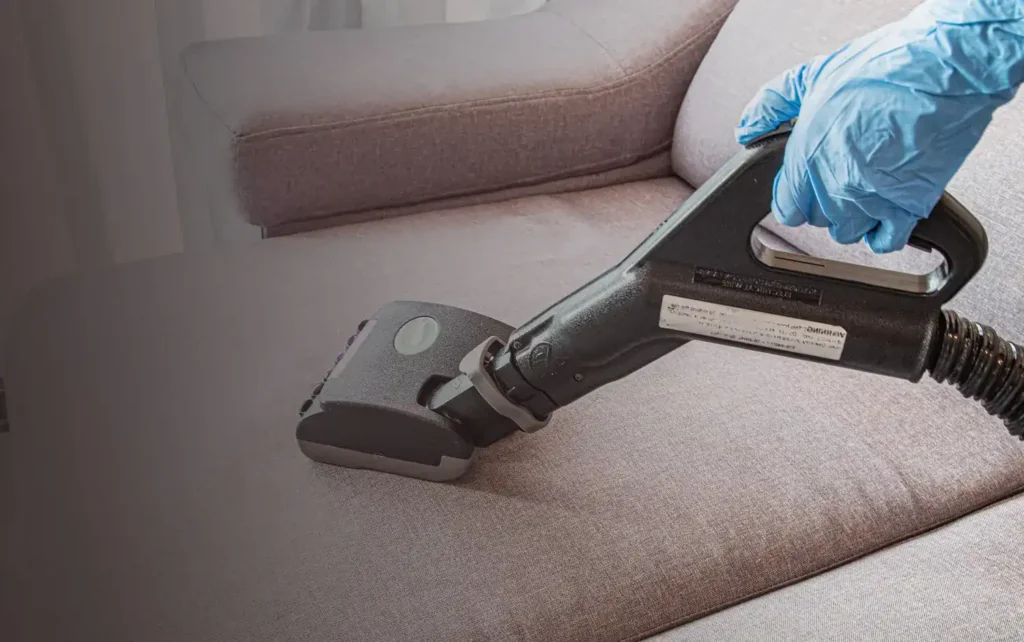
Short answer. There is a letter on a tag under your seat cushion, usually W, S, WS or X. It was put there by the company that made the fabric, and it says whether that fabric may be cleaned with water, with solvent, with either, or with neither. Get it wrong and the damage is not a stain, it is a ring or a shrunken panel, and that does not come out.
How should a sofa be cleaned in Malaysia?
Start with the tag, then work to the fabric rather than to a standard package. Four things decide almost everything:
- Read the care code first. W, S, WS or X. It is under a seat cushion or stapled under the frame
- Match the method to the code, not to whatever machine is already in the van
- Treat leather as a surface, not as a fabric. It is wiped and conditioned, never steamed and extracted
- Plan the drying before the cleaning. In Malaysian humidity a soaked sofa that dries slowly is how you get a smell that was not there before
The rest of this guide explains each one, what you can do yourself, and what a professional clean does that a hired machine from the supermarket cannot.
What is the tag under the cushion?
Lift a seat cushion off and look at the deck underneath, along the front seam, and around the cushion’s own zip. If it is not there, tip the sofa and look at the dust cover on the underside, often near a leg.
You are looking for a single letter. It is a cleaning code, and it is the most useful thing on the whole piece of furniture.
| Code | What it permits | What it forbids |
|---|---|---|
| W | Water-based cleaners. Shampoo, foam, extraction | Solvent spot cleaners. Soaking. W does not mean machine washable, so do not put the cushion covers in the washing machine |
| S | Water-free dry cleaning solvent only | Water of any kind, including water-based sprays and shampoos. Even a little water can leave a ring |
| WS (also written SW or W-S) | Either a water-based cleaner or a mild solvent | Saturation. Still needs a spot test first |
| X | Vacuuming and light brushing, and nothing else | All liquid. No water, no solvent, no foam, no steam |
Two honest caveats about this system, because they are rarely mentioned.
First, there is no standards body behind these letters. No government department and no international standard issues them. The code is assigned by the company that made the fabric, after testing the face cloth, the backing and the finish. That is also why it is trustworthy: nobody knows the material better than the mill that made it.
Second, do not confuse it with the law label, the other tag that lists the filling materials. That one tells you what is inside the cushion. It says nothing about cleaning.
What if there is no tag at all?
Plenty of sofas sold in Malaysia have no code, either because the tag was cut off or because the piece was locally made or reupholstered. In that case the fabric gets treated as unknown, which in practice means testing a hidden patch, usually the back panel or under the skirt, and working up from the gentlest method. Anyone who skips that step on an untagged sofa is guessing with your furniture.
Why does a cleaned sofa sometimes come back with a ring?
This is the single most common complaint after a bad clean, and it has a mechanical explanation.
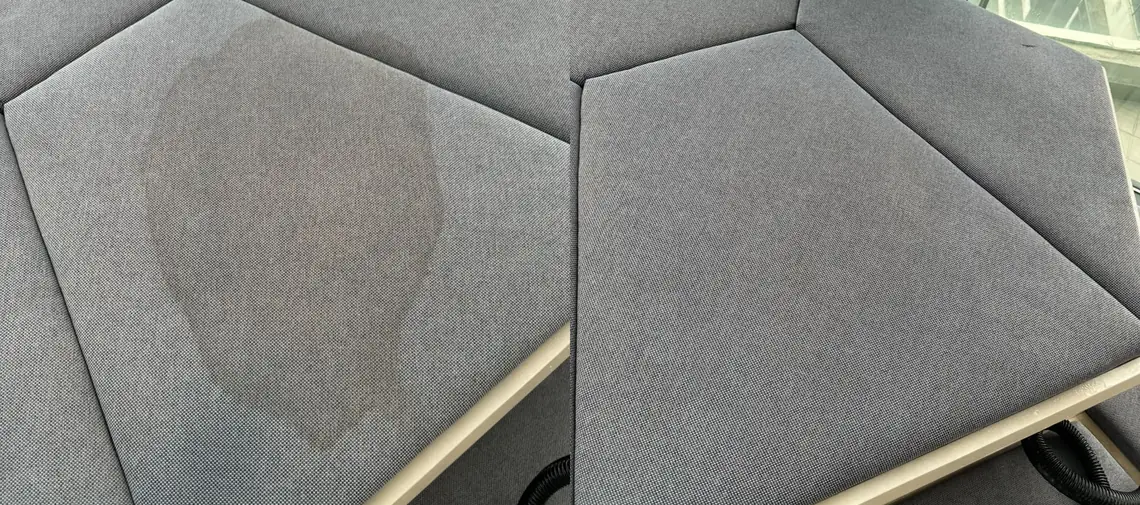
When one patch is wetted and the surrounding fabric is not, the patch dries from its edges inwards. As the water leaves, it carries dissolved soil with it and deposits that material in a line where the wet area met the dry area. You end up with a tide mark that is often more visible than the stain you were trying to remove.
On natural fibres the problem has a second form. The IICRC describes cotton and linen as prone to browning when they are wet and then dry slowly: natural compounds inside the fibre travel to the surface with the moisture and leave a yellow to brown line behind. This is why slow drying is not a neutral inconvenience. It actively changes the result.
Which brings us to the part that makes Malaysia different.
Why Malaysian humidity changes the job
A sofa cleaned in a dry climate gives up its moisture quickly. Here it does not. Our own guide to dust mites in a mattress sets out the numbers: Malaysian indoor humidity commonly sits in the 70 to 80 per cent band all year, and the research there found that the population of mites only stops growing once you get the room below 60 per cent.
The same humidity that suits dust mites also keeps a wet sofa wet. Foam padding holds water well, and a cushion that stays damp inside is a warm, moist, enclosed space. That is where a musty smell comes from after a clean, and it is why the drying stage matters at least as much as the washing stage.
In practice that means three things: do not over-wet in the first place, extract far more water than a domestic machine can, and run the air conditioning or a fan in that room afterwards rather than closing the door on it.
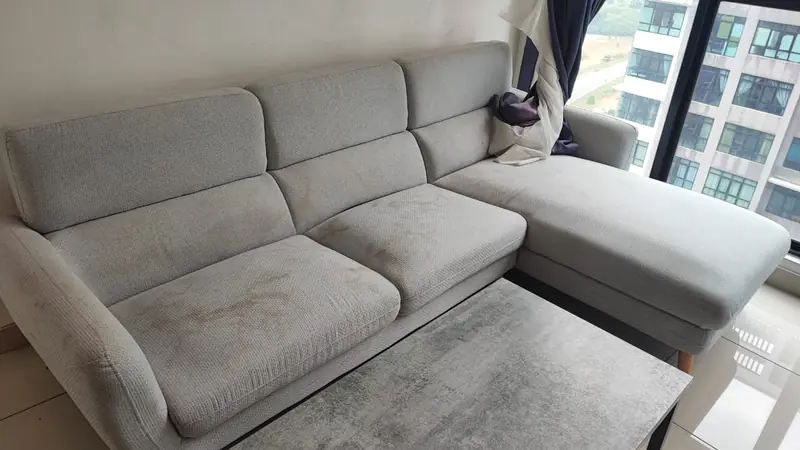
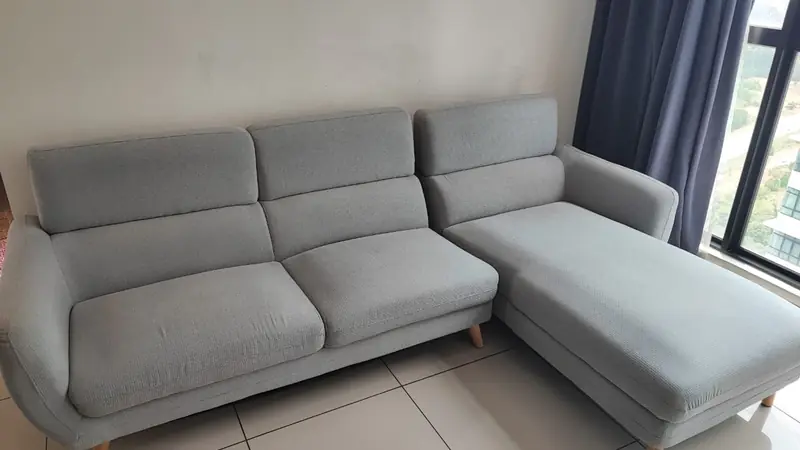
Fabric sofa or leather sofa? They are different jobs
People ask for sofa cleaning as though it were one service. It is two, and they share almost no steps.
| Fabric sofa | Leather sofa | |
|---|---|---|
| What the surface is | Absorbent. Soil goes down into the weave and the foam | A finished surface. Most soil sits on top of the coating |
| Main method | Dry vacuum, then shampoo and extraction, or solvent if the code says S | Wipe down with a pH-appropriate cleaner, then condition |
| Steam | Used on W and WS fabrics, carefully | No. Heat and moisture damage the finish |
| What goes wrong | Tide marks, browning, slow drying, smell | Stripped finish, patchy colour, cracking |
| Normal wear you will see | Flattened pile, shine on the arms, dark headrest patches | Cracking along the seat edge, colour loss where skin touches it |
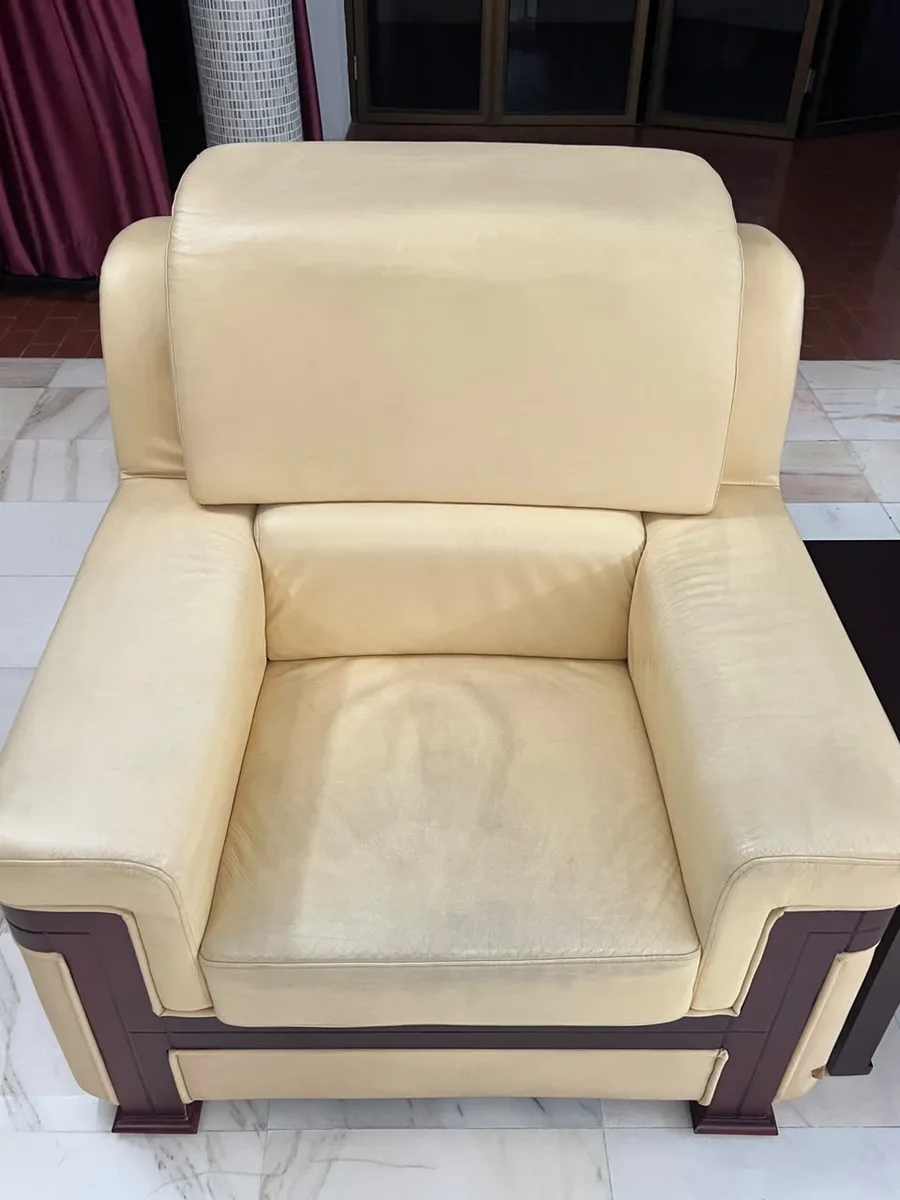
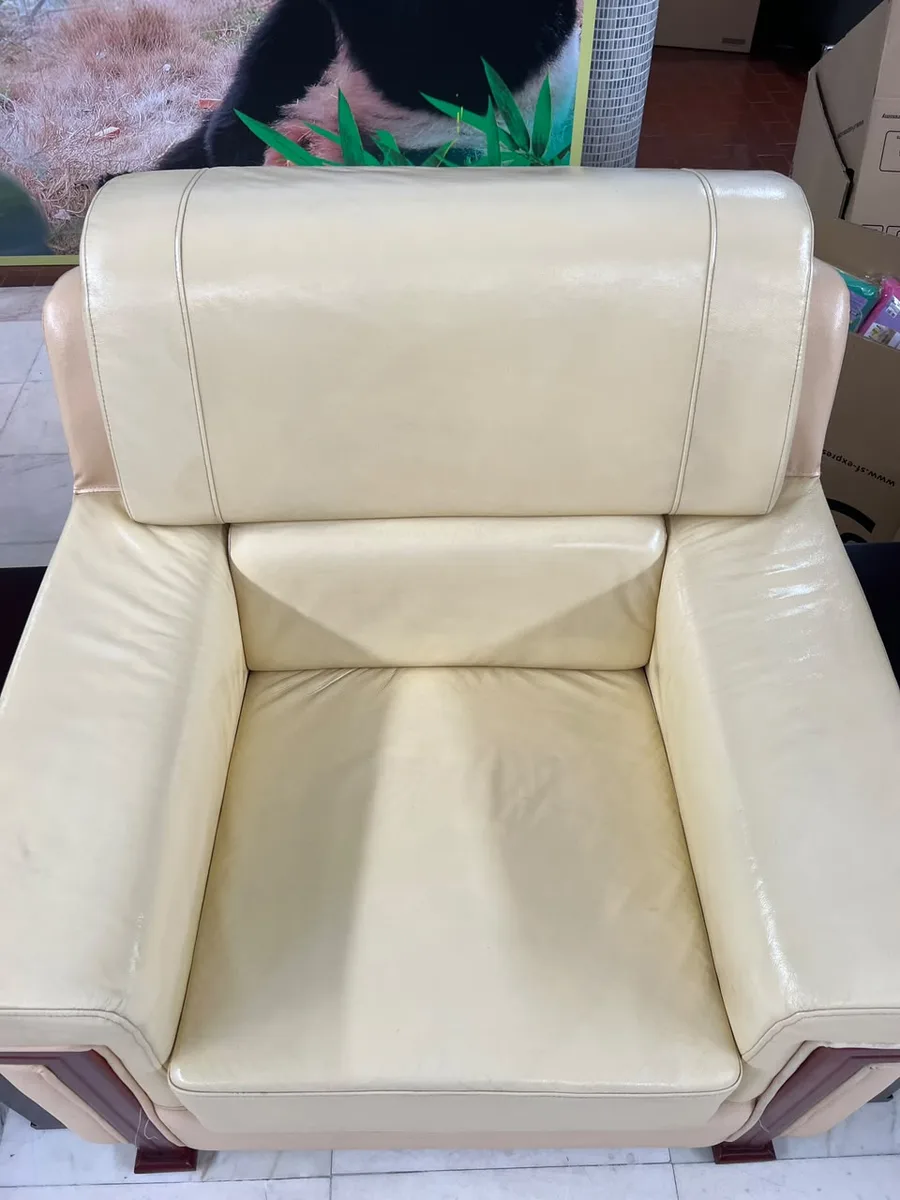
The thing worth knowing about leather is that it does not want to be cleaned often, it wants to be cleaned correctly. Over-conditioning leaves a tacky film that attracts more dust than it prevents. Most leather in a Malaysian living room suffers more from direct sun through a window than from dirt.
How to clean a sofa yourself
None of this needs a company. It is worth doing whether you ever call us or not, and on a lightly soiled sofa it is most of the benefit.
- Check the code first. Everything below assumes you have looked. If it says X, stop after step two
- Vacuum thoroughly rather than often. Take the cushions out, do the deck, the crevices and both sides of each cushion. A slow pass with the upholstery tool beats a fast pass with the floor head
- Test any cleaner on a hidden patch, then wait for it to dry completely before you judge it. A product that looks fine when wet can dry differently
- Work the whole panel, not the spot. This is the one that saves people. If you clean a patch in the middle of a cushion you will get a ring. Clean seam to seam
- Use far less liquid than feels right. Damp cloth, not wet cloth. You cannot extract what you put in
- Dry it fast. Fan on it, air conditioning on in the room, cushions stood on edge so air reaches both faces. Do not put a cushion back until it is dry all the way through
- Leather: a barely damp microfibre cloth, then a leather conditioner two or three times a year. Keep it out of direct sun
What to avoid: dish soap, which leaves a residue that then attracts soil; a hired carpet machine used upright on upholstery, which puts in far more water than it takes out; and scrubbing, which fuzzes the fibre permanently.
What a deep clean does that a hired machine cannot
A sofa cannot go in a washing machine, which is exactly why soil accumulates in it for years. Every time somebody sits down the fibres flex and push fine particles deeper into the padding, and nothing takes them back out.
Our process on a fabric sofa runs in stages, built around removing material rather than treating the surface:
- Deep dry vacuum first, to lift embedded dust before any moisture is introduced
- High temperature steam on fabrics where the code allows it
- Wet shampooing and extraction, so the loosened soil leaves with the water
- Deodorising at the source rather than over the top
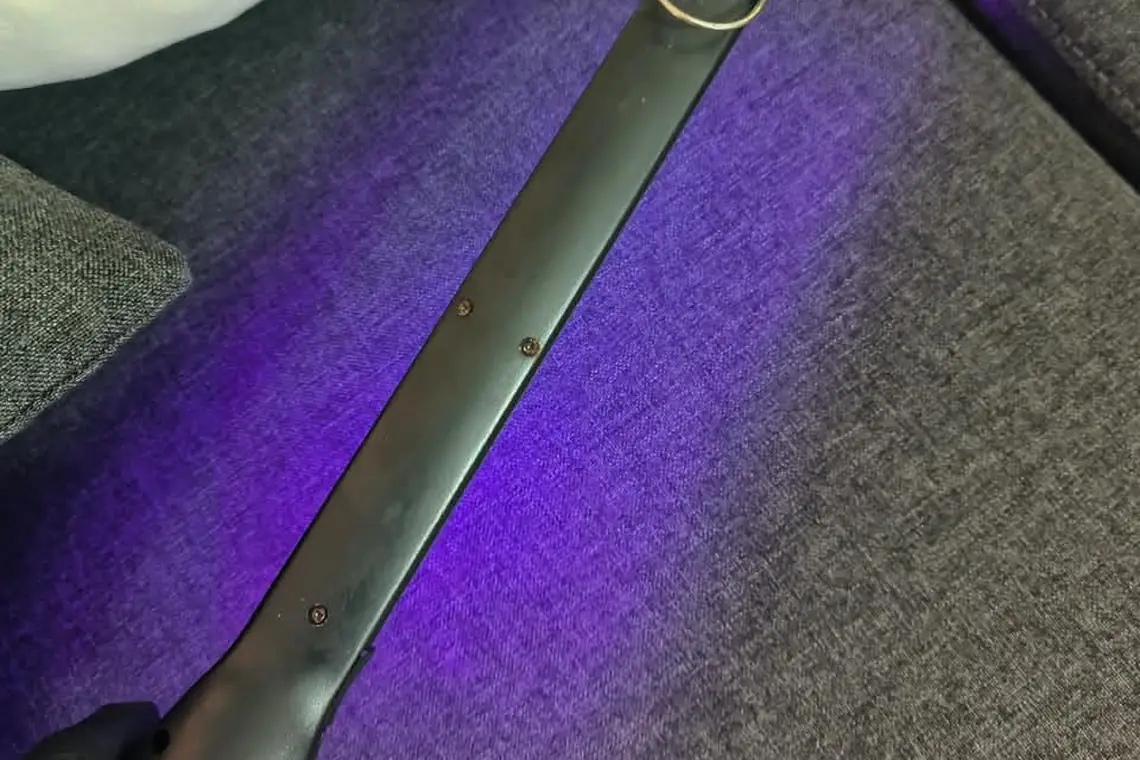
- UV sterilising
- Airborne sanitising to finish the room, not just the item
On a leather sofa the middle stages are replaced by a wipe down and conditioning, because extraction has nothing to extract from.
Honest about the limits. A clean removes what is in the sofa on the day. It does not re-dye faded leather, it does not lift the shine off worn arm fabric, and it does not repair cracking. Permanent dye stains, sun bleaching and torn fibre are damage, not soil, and no cleaner fixes them. If a sofa is ten years old and the foam has collapsed, a clean will make it a clean collapsed sofa. We would rather say that on the phone than after we have taken your money.
What does sofa cleaning cost in Malaysia?
Nobody publishes a single number because a single number would be wrong. What an honest quote depends on:
- Seat count, not sofa count. A quote is built per seat. An L shape is counted by its seats, not as one item
- Fabric or leather, and the care code, because an S code piece needs solvent and more time
- Condition. General dust is routine. Pet urine, mould and heavy staining need extra stages and sometimes a second visit
- Extras. UV sterilising, deodorising and fabric protection are usually priced on top
- Where you are, since travel outside the usual service area is a real cost
Be careful with a very low headline price. The common pattern is a figure that covers a dry vacuum and a light surface shampoo, with extraction, deodorising and sterilising all quoted as additions once the crew is standing in your living room. Ask what is included before anyone arrives, and ask specifically whether extraction is in the price.
The fastest way to a real number is a photograph. Send one and you will get a quote against what is actually there.
How often should a sofa be cleaned?
There is no official standard. What we see in practice is that a household with no particular problem is comfortable at around once a year, a household with young children or pets usually wants it twice, and a sofa that somebody sleeps on is closer to a mattress than to furniture and should be treated that way.
If the arms have gone shiny, if the headrest area has darkened, or if the room smells faintly of the sofa when you walk in after being out, those are the signals. Not the calendar.
Frequently asked questions
Can I steam clean any sofa?
No. Steam is water, so it is ruled out on an S code and on an X code fabric, and it is wrong for leather because heat and moisture attack the finish. On a W or WS fabric it is useful and it is part of a normal clean.
Why did my sofa get a ring after I cleaned a stain?
Because you cleaned the stain and not the panel. As the wet patch dried, the water travelled to the edge of the damp area and carried dissolved soil with it, leaving a line. The fix is to clean seam to seam so there is no boundary for a line to form on.
What does the X cleaning code on a sofa mean?
Vacuum and light brushing only, no liquid at all. It is used on fabrics that shrink or watermark very easily. A professional may still have a dry method available, but on an X fabric that should only happen with the fabric maker’s approval, not on a cleaner’s confidence.
How long does a sofa take to dry after cleaning?
It depends almost entirely on how much water went in and how much air is moving afterwards, which is why a properly extracted sofa in an air conditioned room is in a completely different position from a soaked one behind a closed door. Do not sit on it or replace cushions until it is dry all the way through, including the foam.
Does a sofa have dust mites like a mattress?
Yes. It holds the same shed skin, the same mite droppings and the same embedded dust, and it is cleaned far less often than bedding. A mattress, a sofa and a carpet in the same house are usually one problem rather than three. Our dust mite guide covers the allergen side in detail.
Can pet urine be removed from a sofa?
Often, but it depends how deep it went and how long ago. Urine passes through the cover into the foam, so surface treatment deals with the stain and leaves the smell. It needs treating at the source, and an older contamination that has reached the frame may not come back completely. We will say so before starting rather than after.
Is it cheaper to just buy a new sofa?
Sometimes, and we will tell you when we think so. If the frame is sound and the foam still has shape, cleaning is a fraction of replacement. If the foam has collapsed and the fabric is worn through at the arms, you are paying to clean something that needs replacing or reupholstering.
Not sure what you are dealing with?
Send us a photo of the sofa on WhatsApp, and a photo of the tag under the cushion if you can find it. We will tell you honestly whether it needs a clean, and quote from the photo, usually the same day.
References
- The W, S, WS and X cleaning codes, and the advice against hot water extraction and steam on W and WS fabrics. Cleaning Resources and Considerations, ACT White Paper Series, Appendix I, Association for Contract Textiles. contracttextiles.org
- The statement that the codes are valuable but do not give enough information to clean an upholstery fabric. Attributed in the same ACT appendix to the joint fabric committee of the American Home Furnishings Alliance.
- The professional standard for upholstery cleaning. ANSI/IICRC S300, Second Edition, 2025, Standard for Professional Upholstery Cleaning, Institute of Inspection, Cleaning and Restoration Certification, published 9 September 2025 as an American National Standard. The full text is sold, not free to read. iicrc.org/s300 and the publication notice.
- Tide marks, and browning on cotton and linen that dry slowly. Trade guidance rather than a standard, consistent across two independent cleaning firms: Bozman Cleaning and Clean My Upholstery.
- Malaysian indoor humidity, and the 60 per cent threshold. Set out with its source in our own guide, How to Get Rid of Dust Mites in a Mattress.
Related services: fabric sofa cleaning, leather sofa cleaning and care, mattress cleaning, carpet and rugs.
Baca dalam Bahasa Melayu: Cara Cuci Sofa Rumah. 中文版:洗沙发前,先翻开坐垫看那张标签。
This article is general guidance on furniture care. Cleaning codes are assigned by the fabric manufacturer and vary between pieces, so always check the tag on your own sofa rather than relying on a general guide.